Completed ProjectsAnnual

Polish Culture Festival in China

The Polish Culture Festival in China was an interdisciplinary project introducing Chinese audiences to Polish music, visual arts, film, literature and history. Between 2012 and 2025, fourteen editions took place in Beijing and other cities across China, as well as online.

The Festival’s Vision

Over fourteen editions, the Polish Culture Festival in China introduced Chinese audiences to the breadth and diversity of Polish culture – from classical music, visual arts and film to literature, history and culinary traditions. It brought together artists, cultural institutions and audiences from Poland and China, creating opportunities for dialogue through art and shared cultural experiences.

The first edition took place in 2012. In the years that followed, the Festival grew from an event centred primarily on Beijing into a wider cultural project reaching other cities across China, as well as audiences online.

The Festival aimed to offer a contemporary view of Poland and its people, while building connections and encouraging intercultural understanding. From the outset, its programme was deliberately wide-ranging, bringing together symphonic concerts and recitals with exhibitions, film screenings, literary events, historical projects, fashion shows and public art.

At the heart of the Festival was collaboration. Many events were created in partnership with Chinese orchestras, universities, museums and cultural institutions, enabling artists and organisations from both countries to work together and exchange ideas. In this way, the Festival became not simply a showcase for Polish culture, but a meeting place for creative exchange between Poland and China.
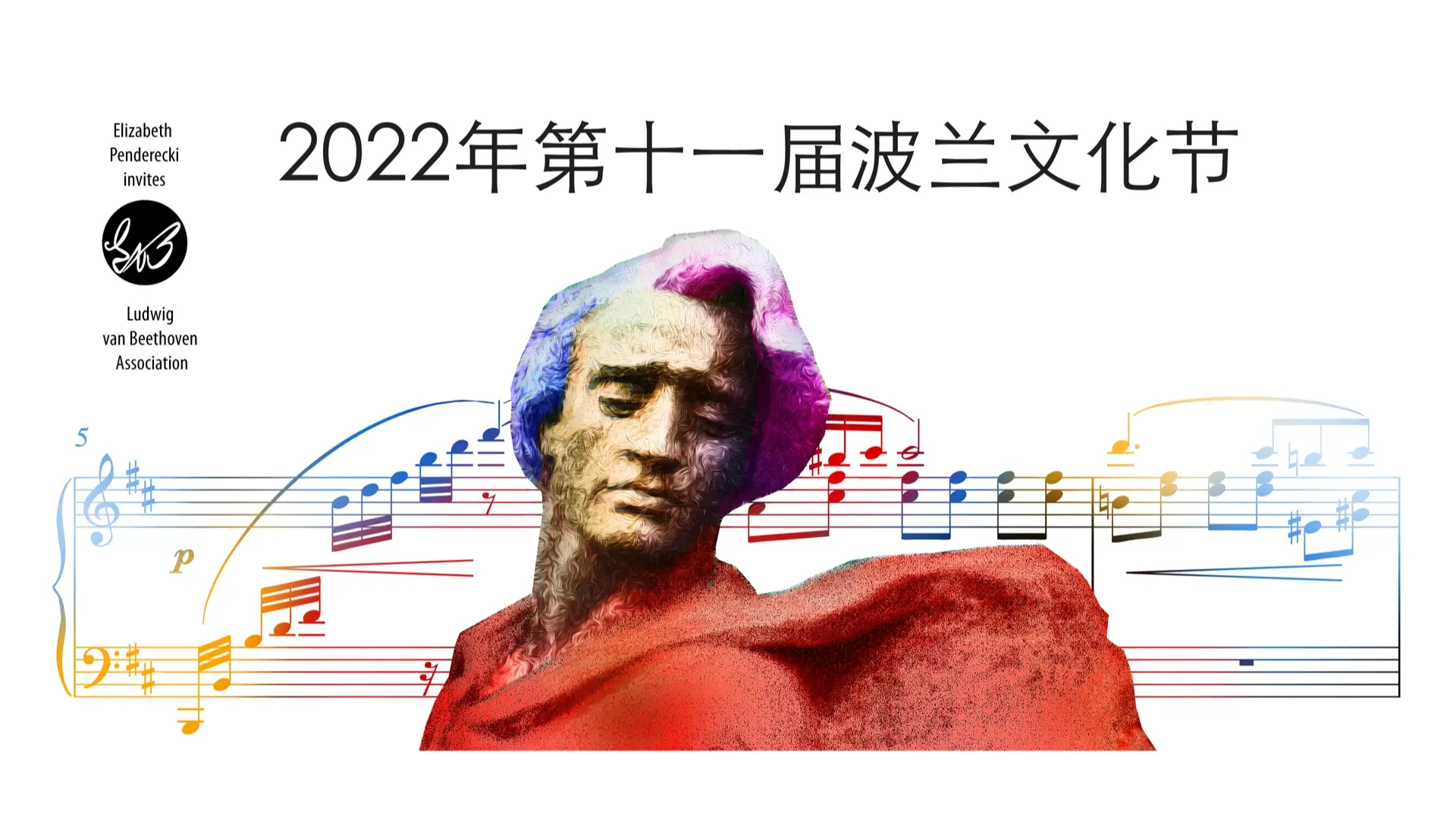
Festival poster, 2022

An Interdisciplinary Programme


Music


Music was one of the Festival’s central strands. Chinese audiences were introduced to works by Fryderyk Chopin, Krzysztof Penderecki, Karol Szymanowski, Ignacy Jan Paderewski and Stanisław Moniuszko, performed by leading Polish artists and often in collaboration with Chinese ensembles.

Artists appearing across the Festival’s fourteen editions included Krzysztof Penderecki, Jan Lisiecki, Łukasz Kuropaczewski, Aleksandra Kuls, Łukasz Krupiński, Krzysztof Książek, Aleksandra Świgut, Książek Piano Duo, Gabriela Legun and Krzysztof Jabłoński. Conductors Łukasz Borowicz and Lin Daye also took part, alongside ensembles including the China National Symphony Orchestra, Ningbo Symphony Orchestra and Shenzhen Symphony Orchestra.


Visual Arts


The Festival presented a broad range of Polish painting, graphic art and poster design. Exhibitions featured work by artists including Krzysztof Skórczewski, Anna Sobol-Wejman, Stanisław Wejman, Jacek Sroka, Tymek Borowski, Paweł Śliwiński and Marek Wasilewski. The programme also explored the work of Tadeusz Kantor and brought Polish art into Beijing’s public spaces with a mural by Sebastian Bożek.

In 2025, G Art Museum in Fuzhou hosted an exhibition devoted to the work of Andrzej Klimowski, organised in collaboration with the National Museum in Poznań. The Festival also presented an exhibition of posters created during an artistic residency by Yulong Li, developed in partnership with the National Museum in Kraków.


Film, Literature and History


Polish cinema was another important part of the programme. In 2016, the Festival presented four films by Andrzej Wajda: Ashes and Diamonds, The Maids of Wilko, The Promised Land and Afterimage. The final edition featured Paweł Pawlikowski’s Cold War, Wojciech Jerzy Has’s The Hourglass Sanatorium and Jakub Piątek’s documentary Pianoforte.

Literature was represented by projects including the launch of a Chinese-language audiobook of Henryk Sienkiewicz’s With Fire and Sword. Historical projects, meanwhile, explored the stories of Poles in China – from the Polish Consulate in Harbin to the work of doctor and priest Wacław Szuniewicz and the life of entrepreneur and philanthropist Władysław Kowalski.

The Festival’s Legacy

Over the years, the Festival helped raise the profile of Polish culture in China, presenting it as vibrant, diverse and open to dialogue. It brought together classical and contemporary culture, explored the shared histories of Poland and China, and created opportunities for artists and institutions from both countries to work together.

Across fourteen editions, the Festival presented dozens of events in cities throughout China, working with leading cultural partners and reaching audiences in concert halls, museums and online. Although the Festival has now concluded, its legacy reflects more than a decade of cultural exchange and a sustained Polish cultural presence in China.

Organisers and Partners

The Festival was organised by the Ludwig van Beethoven Association and the Polish Institute in Beijing, working with the Embassy of the Republic of Poland in Beijing, Polish diplomatic missions and a wide network of cultural institutions in Poland and China.

Over the course of its fourteen editions, partners and co-organisers included the Adam Mickiewicz Institute, Polish Film Institute, Polish Radio 2, Wawel Royal Castle, the Royal Łazienki Museum, the National Museum in Kraków, the National Museum in Poznań, China National Symphony Orchestra, Ningbo Symphony Orchestra, Shenzhen Symphony Orchestra, Central Conservatory of Music in Beijing, Shanghai Conservatory of Music and G Art Museum in Fuzhou.

The project received funding from the Polish Ministry of Culture and National Heritage over a number of years. For the final edition, LOTTO was the Main Partner, ORLEN the Patron, and G-City a Partner.

Festival Highlights

2012–2016 — An interdisciplinary programme takes shape
The Festival’s early editions brought together concerts, exhibitions, film, literature and public art. During these years, the Festival established partnerships with institutions including Tsinghua University’s Academy of Arts & Design and the China Film Archive.

2017 — Beyond Beijing
Pianist Krzysztof Książek toured five Chinese cities – Beijing, Chengdu, Guangzhou, Zhongshan and Ningbo – where he also performed with the Ningbo Symphony Orchestra.

2018 — Celebrating the centenary of Polish independence
The seventh edition, held from 9 November to 8 December, marked the centenary of Poland regaining its independence.

2019 — 70 years of Polish-Chinese diplomatic relations
The eighth edition opened with a Chopin recital by Aleksandra Świgut at the Polish Embassy in Beijing, as part of celebrations marking 70 years of diplomatic relations between Poland and China.

2020 — Stories of the Polish community in China
Presented online, the ninth edition explored the history of Poles in China, including the story of the Polish Consulate in Harbin and the work of Wacław Szuniewicz in the country.

2021 — A tenth edition and Chopin at Wawel
For the Festival’s tenth edition, recitals by Marcin Wieczorek, Aleksandra Świgut, Jakub Kuszlik and Andrzej Wierciński were recorded at Wawel Royal Castle in Kraków. Linked to the 18th International Fryderyk Chopin Piano Competition, the performances were shared with audiences in China on Weibo.

2022 — Reaching more than 1.5 million viewers
Concerts by Książek Piano Duo and soprano Gabriela Legun, recorded at the Royal Łazienki Museum in Warsaw, reached more than 1.5 million viewers in China via Weibo. The programme formed part of Poland’s celebrations of the Year of Polish Romanticism.

2025 — The fourteenth and final edition
In Shenzhen, Krzysztof Jabłoński performed Chopin’s piano concertos with the Shenzhen Symphony Orchestra, conducted by Lin Daye, for an audience of several thousand. The final edition also featured exhibitions in Fuzhou and screenings of Polish films.

Privacy settings (cookies)
This website uses cookies to improve our service. For more information and to personalize your preferences, click "Settings." You can change your preferences at any time, as well as withdraw your consent to the use of cookies, on the following page.
Polityka prywatności
*Z wyjątkiem niezbędnych
Przesuwając suwak w prawo aktywujesz konkretną zgodę. Przesuwając suwak w lewo wyłączasz taką zgodę.
Required (1)
Analytics (2)
Marketing (6)